 Back home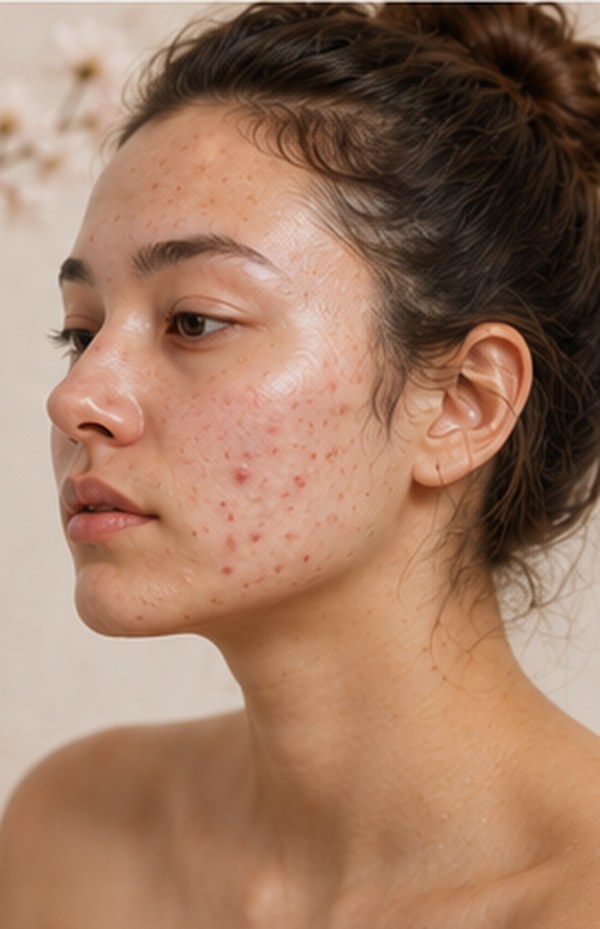
Acne is not a hygiene problem and it is not your fault. It happens when pores become clogged with sebum and dead skin cells, sometimes inflamed by bacteria (C. acnes) and hormones. The single most useful thing you can do is identify which type of acne you actually have — because the softening blackhead routine that helps one person can flare another person's cystic acne badly.
The main types of acne and how to treat each
1. Comedonal acne — blackheads & whiteheads
Non-inflamed clogged pores. Blackheads (open comedones) look dark because oxidised sebum darkens at the surface; whiteheads (closed comedones) sit under a thin layer of skin as small bumps. There is no redness or pain.
- Best actives: salicylic acid (BHA) 1–2%, mandelic acid, gentle retinoids (adapalene 0.1%).
- Niacinamide 4–5% daily to regulate sebum.
- Double cleanse in the evening — an oil cleanser dissolves sebum that water can't.
- Avoid: physical scrubs, pore strips, squeezing. They damage the pore wall and cause inflammation.
2. Inflammatory acne — papules & pustules
Red, raised bumps (papules) or those same bumps with a white/yellow head (pustules). Tender to the touch. Caused when clogged pores become inflamed and colonised by acne bacteria.
- Best actives: benzoyl peroxide 2.5–5% (kills C. acnes), adapalene, azelaic acid 10–20%.
- Salicylic acid spot-treatments help individual pustules.
- Centella, madecassoside and panthenol calm the surrounding redness.
- Avoid: layering too many actives at once — pick one antibacterial + one comedolytic, not three.
3. Cystic & nodular acne
Deep, painful lumps under the skin that can last weeks and often scar. Hormonally driven in most adults. This is the type that genuinely needs medical help.
- See a dermatologist — prescription options (oral antibiotics, spironolactone, isotretinoin) are far more effective than anything topical.
- At home: keep the routine simple and barrier-focused while medical treatment works.
- Azelaic acid is one of the few topicals safe and useful alongside most prescriptions.
- Avoid: strong scrubs, picking, layering retinoids on broken skin, DIY 'extractions'.
4. Hormonal acne
Tends to flare on the lower face — jawline, chin and neck — and follows your cycle or stress patterns. Often a mix of deep tender bumps and surface pustules in the same area, recurring monthly.
- Topical: azelaic acid, adapalene at night, niacinamide morning.
- Medical: hormonal birth control or spironolactone can be transformative — speak to a GP/derm.
- Track flares against your cycle so you can pre-empt them with a gentler routine that week.
5. Fungal acne (Malassezia folliculitis)
Not true acne, but often mistaken for it. Tiny, uniform, itchy bumps — usually on the forehead, hairline, chest or back. Caused by yeast overgrowth in the follicle, not bacteria. It does not respond to benzoyl peroxide or salicylic acid alone.
- Look for: ketoconazole shampoo (used as a short body/face wash, left on 3–5 min, rinsed), zinc pyrithione.
- Avoid: heavy oils and fatty acids that feed Malassezia (coconut oil, olive squalane substitutes, oleic-rich plant oils).
- If bumps are uniform, itchy and don't respond to acne care — see a dermatologist to confirm.
6. Post-acne marks (PIH & PIE)
The flat marks left behind after a spot clears. PIH (post-inflammatory hyperpigmentation) is brown / dark; PIE (post-inflammatory erythema) is pink / red. Neither is a scar — both fade with time and the right care.
- For PIH (brown): niacinamide, alpha arbutin, tranexamic acid, vitamin C, gentle retinoids — and SPF 50 every day, non-negotiable.
- For PIE (red): centella, madecassoside, azelaic acid, and patience — these fade more slowly.
- Avoid picking new spots — that's the single biggest cause of marks lasting months instead of weeks.
A barrier-first baseline routine for acne-prone skin
Morning
- Low-pH gel cleanser.
- Hydrating, alcohol-free toner.
- Niacinamide serum.
- Lightweight, non-comedogenic gel moisturiser.
- Broad-spectrum SPF 50 — a fluid or gel sunscreen.
Evening
- Oil cleanser → low-pH water cleanser.
- BHA, adapalene or azelaic acid (one active, not all three) — 3–5 nights a week to start.
- Soothing essence with centella / madecassoside on alternate nights.
- Lightweight moisturiser to keep the barrier comfortable.
What makes acne worse
- Over-cleansing and harsh foaming washes — the skin compensates with more oil.
- Stacking too many actives at once (BHA + retinoid + benzoyl peroxide + vitamin C every night).
- Skipping moisturiser because skin 'feels oily' — dehydrated skin produces more sebum.
- Picking, popping and over-touching the face.
- Skipping SPF — every active above makes skin more sun-sensitive, and UV worsens marks.


