 Back home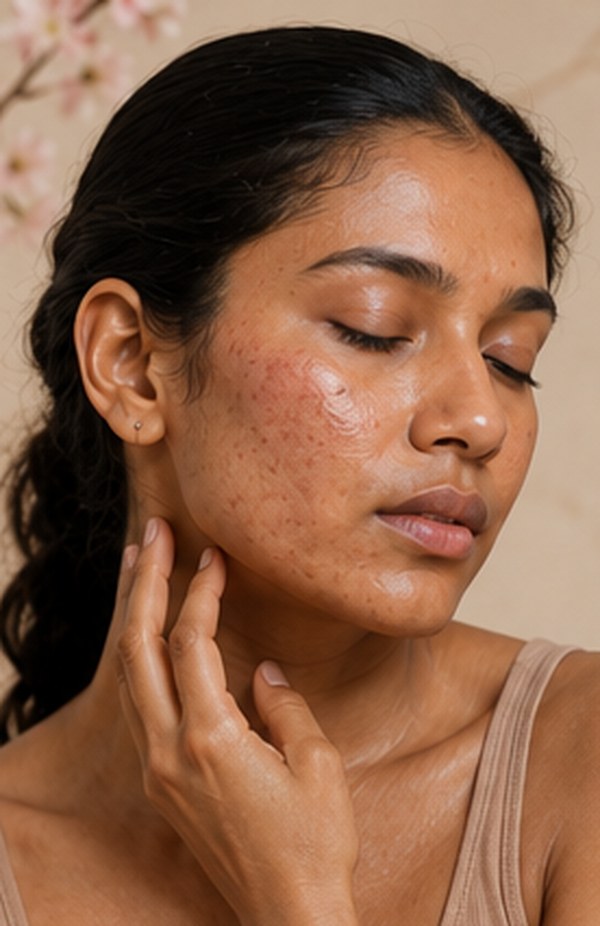
Eczema (atopic dermatitis) and flared, broken skin are medical conditions, not just 'skincare problems'. Skincare can support the barrier, reduce dryness and calm irritation, but it does not replace dermatology or prescribed treatment. If your skin is weeping, cracked, painful or infected, please see a doctor first.
What flared skin looks like
- Red, hot or pink patches that feel tight or itchy.
- Dry, rough, flaky or cracked areas.
- A stinging response to almost any product, including water.
- A 'thinned' feeling — as if the skin can't hold moisture in.
Care that helps during and between flares
- Strip the routine back to: gentle cleanser → barrier moisturiser → SPF. That's enough during a flare.
- Use fragrance-free, dye-free, alcohol-free formulas only.
- Centella, panthenol, allantoin, madecassoside, oat extract and ceramides are your friends.
- Avoid all acids, retinoids, vitamin C and physical exfoliation while skin is flared.
- Moisturise on damp skin — within 60 seconds of cleansing — to lock water in.
- Mineral SPF (zinc oxide) tends to sting less than chemical filters.
- See a dermatologist for prescription support if flares are frequent or severe.
A minimalist barrier-rescue routine
Morning
- Rinse with lukewarm water, or a cream cleanser if needed.
- Centella or heartleaf essence (optional).
- Rich barrier cream with ceramides.
- Mineral SPF 50.
Evening
- Cream cleanser if you wore SPF or makeup; otherwise just water.
- Layer a soothing essence, then a generous barrier cream or ointment.
- Add a sleeping mask on top during severe dryness.


