 Back home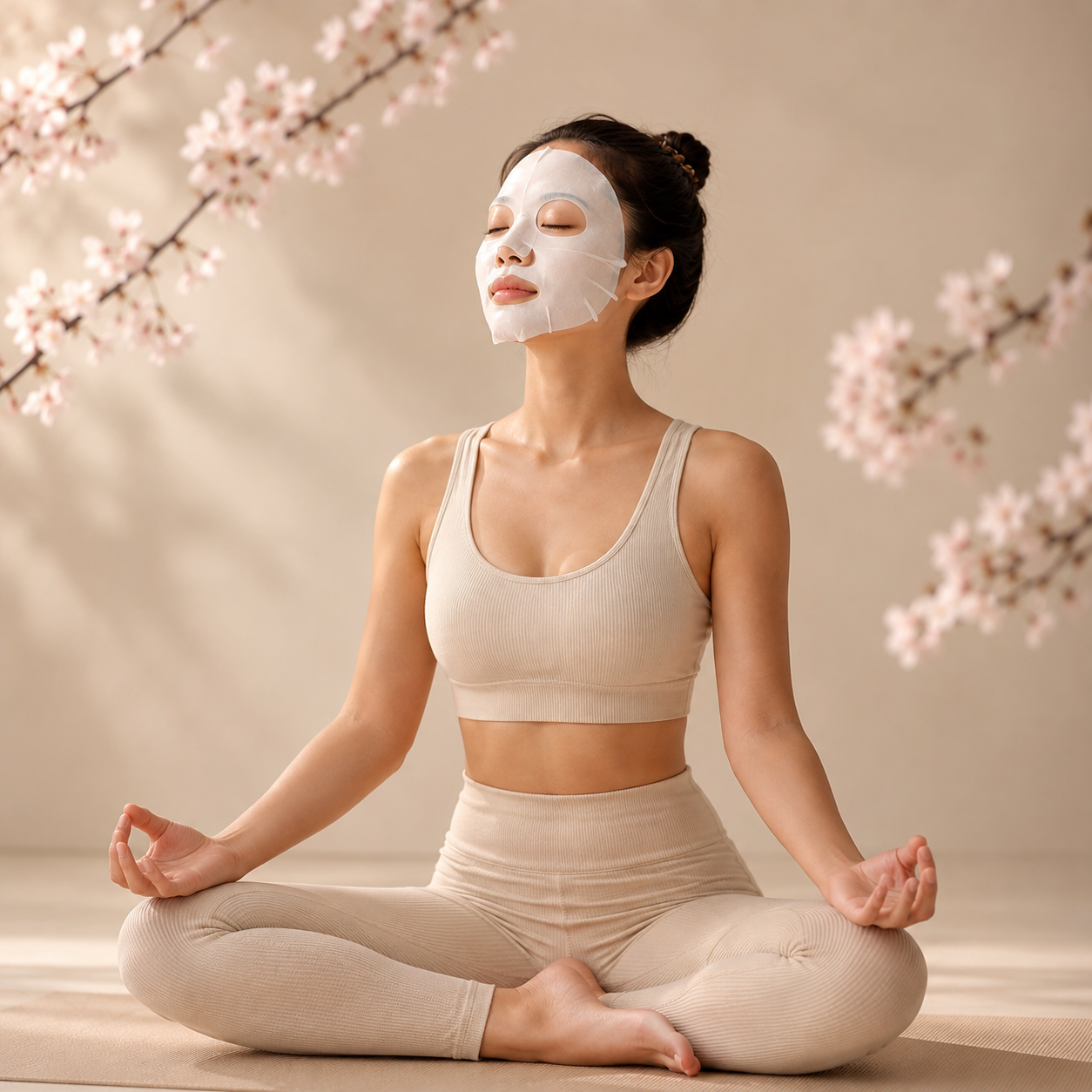
Skincare works from the outside in — but only about halfway. Sleep, stress, diet, hydration, exercise, hormones and scalp health all show up on your face long before any serum does. Real glow is a whole-life project.
Sleep & skin
Deep sleep is when your skin does most of its repair. Growth hormone peaks, collagen is synthesised, and blood flow to the skin increases. Chronic sleep deprivation (fewer than 6 hours over weeks) is linked to slower barrier recovery, more visible fine lines and duller tone.
- Aim for 7–9 hours a night.
- Sleep on a clean silk or satin pillowcase to reduce friction and moisture loss.
- Apply your evening skincare 20–30 minutes before bed so it absorbs, not transfers.
- Keep the bedroom cool and dark — melatonin is your quiet skin ally.
Stress & breakouts
Cortisol — your main stress hormone — tells oil glands to produce more sebum and slows barrier repair. It's why breakouts often appear during exams, deadlines or emotional weeks. Skincare alone can't out-run chronic stress.
- Short daily rituals (a slow cleanse, a hand cream, a five-minute walk) genuinely lower cortisol.
- Deep breathing for 2 minutes, twice a day, reduces skin inflammation over weeks.
- Avoid piling actives onto stressed skin — simplify while you're overloaded.
Diet & skin health
- Protein — collagen, elastin and barrier lipids need amino acids. Aim for a palm-sized portion at each meal.
- Omega-3s — oily fish, walnuts, chia; support the lipid layer of the skin barrier.
- Colourful plants — antioxidants (vitamin C, polyphenols, carotenoids) protect against oxidative damage.
- Limit ultra-processed sugars — glycation stiffens collagen fibres over time.
- Dairy and very-high-glycaemic foods can flare acne in some people; keep a two-week diary if you suspect a link.
Hydration
Drinking water alone won't 'plump' your face — dehydration inside the skin is more about barrier lipids and humectants than volume of water intake. Still, staying well hydrated supports every process your skin relies on.
- About 30 ml per kg of body weight per day is a reasonable baseline.
- Herbal teas, fruit and vegetables all count.
- Excess caffeine and alcohol pull water out — balance them.
Exercise & skin
- Improves circulation and post-workout glow.
- Sweating helps clear pores — but only if you cleanse afterwards. Sitting in salty sweat causes breakouts.
- Wear SPF 50 for outdoor exercise, and reapply after towelling.
- Very intense over-training can raise cortisol and worsen breakouts — balance with rest.
Hormonal changes
Hormones shape everything from oil production to pigmentation. Cyclical breakouts along the jawline are common; melasma often flares in pregnancy or on certain contraceptives; menopause thins the skin and reduces natural moisture.
- Track cyclical patterns for two to three months — the trigger is usually clearer than it feels.
- For persistent hormonal acne, melasma or perimenopausal changes, see a GP or dermatologist. Skincare supports the treatment; it rarely replaces it.
- Be extra strict with SPF during hormonal pigmentation flares.
Healthy scalp & hair
Your scalp is skin. When it's inflamed, oily, dry or shedding, the same rules apply — barrier support, low-irritation cleansing and avoiding over-active products.
- Cleanse the scalp, not just the length. Massage shampoo into the roots for 30–60 seconds.
- Balance protein and moisture masks weekly.
- Avoid ultra-hot water and daily heat styling.
- Persistent dandruff, itch or hair loss deserves a dermatologist — it's rarely a shampoo problem alone.
Explore Litsy's Lifestyle & Skin collection — soothing body care, scalp treatments and calming rituals designed to support the life your skin lives in.


