 Back home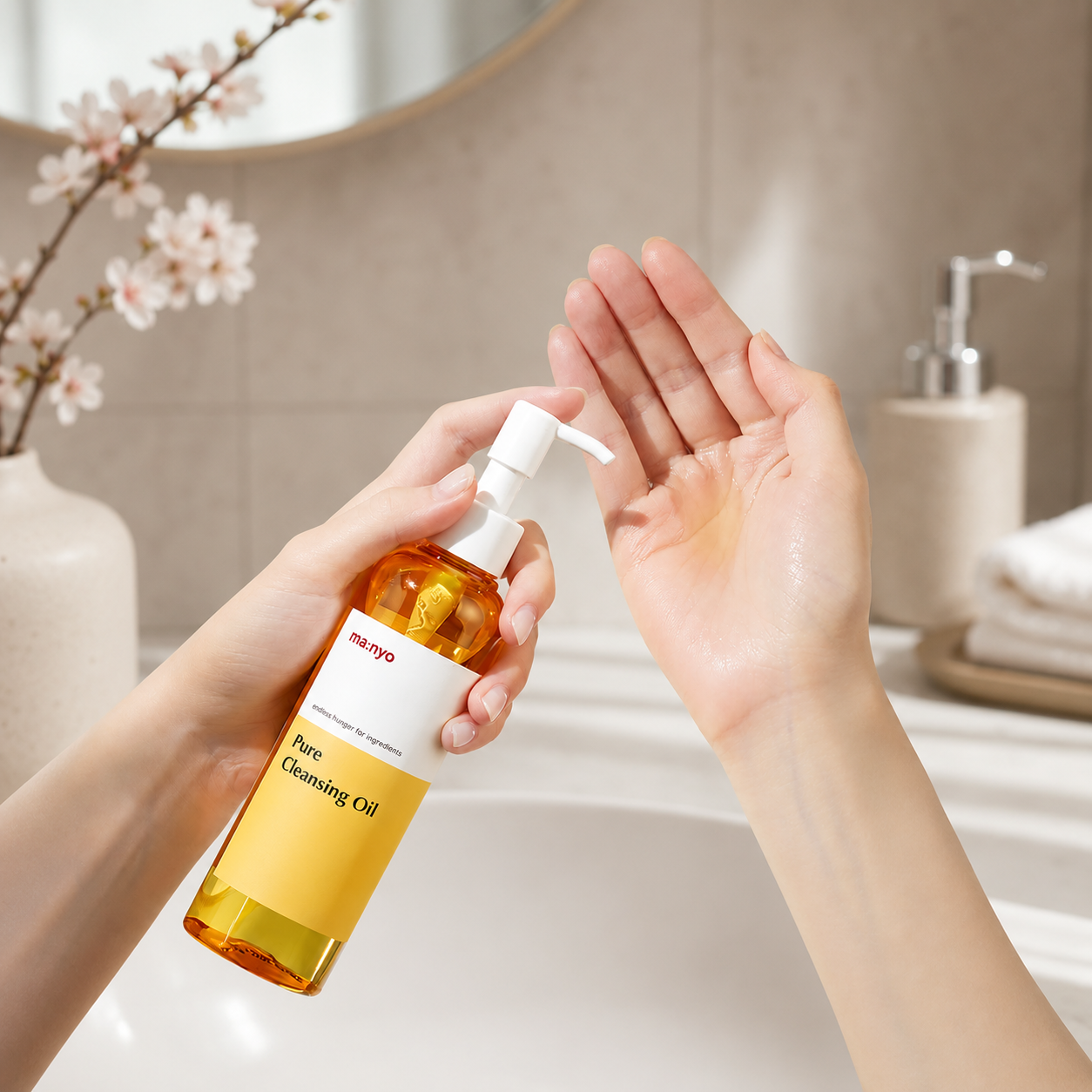
Oil cleansers are the quiet workhorses of Korean skincare — the first step in a double cleanse, and the one most people skip or misunderstand. Water and foaming washes cannot dissolve sunscreen, sebum, waterproof makeup or the day's pollution; oil can. And no, oil cleansers are not just for dry skin — used correctly, they suit oily, combination and even acne-prone skin beautifully.
What an oil cleanser actually does
Oil cleansers work on the principle that like dissolves like. They bind to the oil-based grime sitting on your skin — SPF filters, sebum, foundation, pollution particles — and lift it away when you emulsify with water and rinse. A soft, low-irritation water-based cleanser then follows to wash off any residue and the sweat / water-soluble debris underneath. That two-step ritual is the classic Korean double cleanse.
- Dissolves sunscreen, waterproof makeup and sebum that water cleansers can't touch.
- Preserves your skin barrier — no tightness, no squeaky feeling.
- Softens hardened sebum inside pores over time, reducing visible blackheads.
- Leaves skin comfortable and prepped to absorb the layers that follow.
Not all oil cleansers are the same
Oil cleansers vary enormously in formula, feel and finish. The right one depends on your skin type, what you wear during the day, and how sensitive your skin is.
By texture
- Fluid oils — traditional pump-bottle oils (like a classic Korean pure cleansing oil). Fast, effective, feel light on the skin.
- Cleansing balms — solid at room temperature, melt on contact. Great for a slower, more spa-like ritual and dry or mature skin.
- Cleansing milks / creams with oil — lighter, gentler emulsions for very sensitive or reactive skin.
- Gel-to-oil cleansers — start as a gel, transform into oil, then emulsify to milk. A versatile middle ground.
By oil base
- Ester-based oils (like caprylic/capric triglyceride, ethylhexyl palmitate) — light, fast-rinsing, non-comedogenic. Excellent for oily / acne-prone skin.
- Plant oils (sunflower, grapeseed, safflower, olive squalane) — nourishing, barrier-friendly. Suit most skin types; heavier oils (coconut, some olive) can clog acne-prone skin.
- Botanical / functional blends — with ingredients like green tea, heartleaf, centella or PDRN for extra soothing or brightening benefits.
Oil cleansers are not only for dry skin
This is the biggest myth in cleansing. Oily and acne-prone skin often benefit the most from a well-formulated oil cleanser — because harsh foaming washes strip the barrier, and stripped skin produces more oil to compensate. A skin-softening oil cleanser lifts sebum and SPF without triggering that rebound.
- Oily / combination — choose light, ester-based or gel-to-oil formulas that rinse completely clean.
- Acne-prone — look for non-comedogenic oils (grapeseed, safflower, squalane, caprylic triglycerides). Avoid coconut oil and heavy plant butters.
- Dry / mature — cleansing balms and richer plant-oil blends comfort the barrier and leave skin soft.
- Sensitive — fragrance-free milks or minimal-ingredient oils; patch-test on the jawline first.
How to use an oil cleanser properly
- Apply to dry hands and dry skin — water at this stage prevents the oil from binding to sebum and SPF.
- Massage gently for 30–60 seconds, focusing on the nose, chin and hairline where sebum and sunscreen build up.
- Add a splash of lukewarm water and keep massaging — the oil will emulsify into a milky lotion. This is the moment it lifts everything away.
- Rinse thoroughly with lukewarm water.
- Follow with a low-pH water-based cleanser — the second step is not optional.
- Pat (don't rub) dry, then go straight into your hydrating layers.
Tips & advice
- Only double cleanse in the evening. In the morning, a single water-based cleanse (or just a lukewarm rinse) is enough.
- If your face feels tight or squeaky after cleansing, the cleanser — or the second one — is too harsh.
- Give the massage time. 30–60 seconds is where the real cleanse happens; a 5-second sweep isn't enough to dissolve SPF.
- Never skip the emulsification step. Under-emulsified oil leaves a film that can look like breakouts a few days later.
- Store balms and pure oils out of direct sunlight — heat and light degrade delicate plant oils faster than you'd think.
- If you break out after switching cleansers, pause new actives for a week and re-check whether the oil is truly rinsing clean.
Common mistakes to avoid
- Using oil cleanser on wet skin — dramatically reduces its ability to lift SPF and makeup.
- Skipping the second cleanse and going straight to toner — residue interferes with your serums and can clog pores.
- Assuming 'natural = better'. Coconut oil, for example, is highly comedogenic for many people.
- Choosing a cleanser by scent alone — a beautiful fragrance can hide a formula that doesn't rinse cleanly.
A well-chosen oil cleanser is one of the most underrated products in a Korean routine — it protects the barrier, prepares the canvas and makes every step that follows work harder. Explore our range of barrier-friendly oil cleansers and balms in the Litsy shop.
Explore a one-step oil-to-foam option: NIDA Perfect Clear Oil-to-Foam Double Cleanser


