 Back home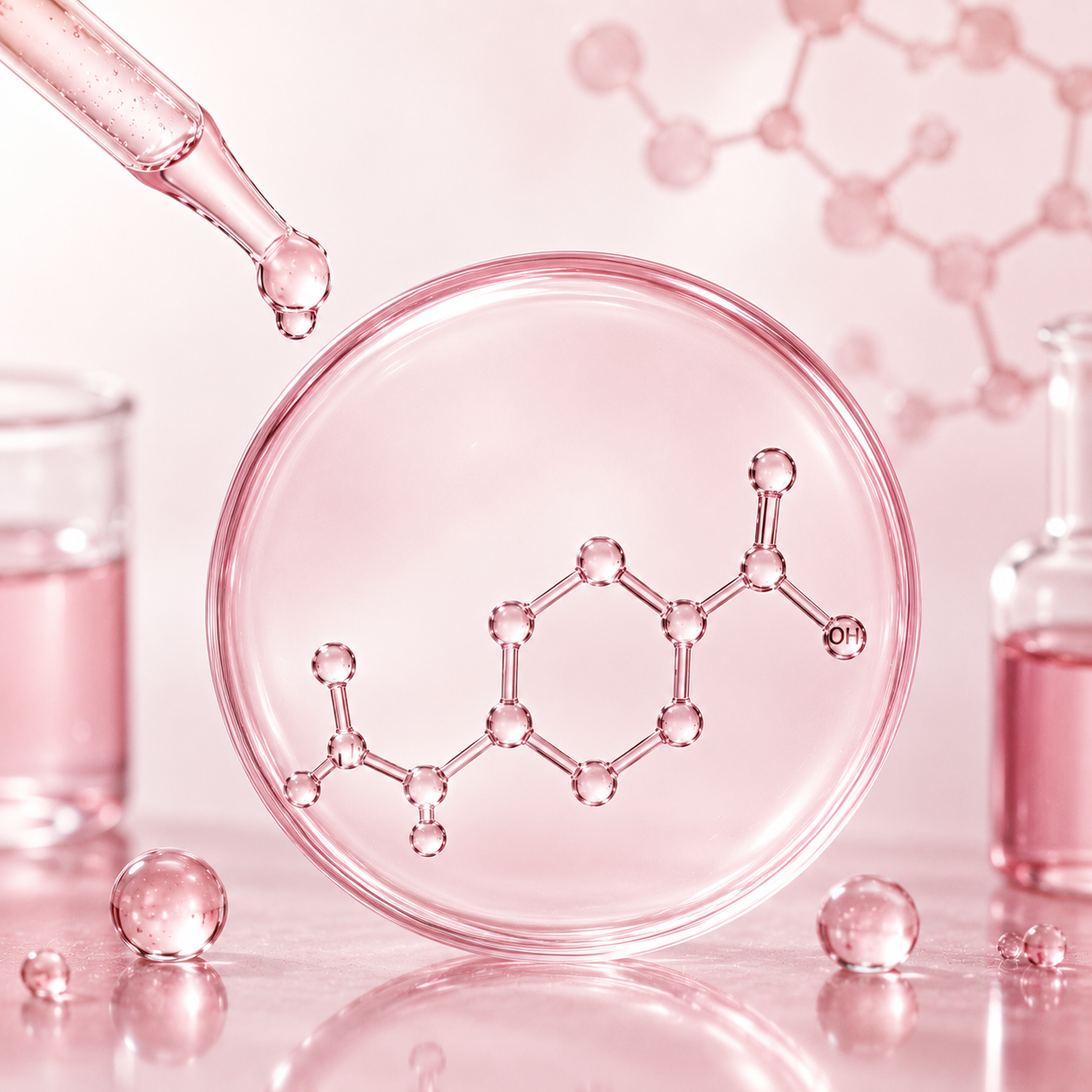
Tranexamic acid — often abbreviated to TXA — is one of the most exciting pigmentation ingredients of the last decade. Originally used in medicine to control bleeding, dermatologists discovered it also subtly interrupts the pathways that cause melasma, sun spots and post-inflammatory dark marks. Applied topically it's gentle, non-photosensitising and safe for long-term use — a rare combination in the pigmentation world.
What it is
TXA is a synthetic derivative of the amino acid lysine. In skin, it calms the signal between the upper layer (keratinocytes) and pigment-producing cells (melanocytes), so less melanin is made in response to UV, inflammation and hormones. Unlike hydroquinone, it doesn't bleach; unlike strong acids, it doesn't exfoliate. It simply asks the skin to make less pigment in the first place.
What TXA does
- Fades melasma — the stubborn, hormone-linked pigmentation on cheeks, forehead and upper lip.
- Softens sun spots and age-related dark patches.
- Reduces post-inflammatory hyperpigmentation (marks left by acne, eczema and irritation).
- Calms overall redness and reactivity — useful in rosacea-prone skin.
- Evens tone without stripping or thinning the skin.
Percentages
- 2–3%: the everyday sweet spot in Korean serums and essences. Gentle, effective, well-tolerated long-term.
- 5%: treatment-level, often paired with niacinamide and alpha arbutin. Great for stubborn melasma.
- Higher percentages (in dermatologist prescriptions or oral form) exist but require medical supervision.
How to use it
- Cleanse and tone.
- Apply a TXA serum or essence morning and/or evening to clean, damp skin.
- Follow with moisturiser.
- In the morning, always finish with SPF 50 — pigmentation cannot fade if UV keeps triggering it.
- Give it a full 8–12 weeks before judging. Pigmentation is slow to build and slow to fade.
What to expect
- Weeks 1–4: skin looks calmer and slightly brighter overall.
- Weeks 4–8: post-blemish marks visibly lighter.
- Weeks 8–12: melasma patches softer and less defined; sun spots fading gradually.
- 3–6 months: significant, natural-looking evenness — provided SPF is worn daily.
Who it's for
- Melasma — arguably the strongest topical option for at-home care.
- Post-inflammatory hyperpigmentation from acne, eczema or irritation.
- Sun-related dark spots and uneven tone.
- All skin tones — TXA is safe and effective on deeper skin tones that can be sensitive to hydroquinone.
- Pregnancy and breastfeeding — topical TXA is widely considered safe, but always confirm with your doctor.
Pairings and cautions
- Pairs beautifully with niacinamide, alpha arbutin, vitamin C and daily SPF — the classic pigmentation stack.
- Safe alongside retinal (use retinal at night, TXA morning or on off-nights).
- Avoid pairing with strong AHAs on the same night if skin is reactive — alternate them.
- SPF is not optional. Without daily sun protection, no pigmentation ingredient — including TXA — will keep up.
Browse tranexamic acid serums, essences and pairing niacinamide + SPF products in the Litsy shop — a gentle, long-term approach to fading pigmentation.
Explore a 3% tranexamic acid and 2% alpha-arbutin serum: NIDA α-Arbutin TXA Pure Tone Serum


